

// ABOUT
We architect and build the systems enterprise teams can't buy off the shelf.
Haus Creatives is a Fractional CTO practice with enterprise architecture depth. Our track record spans global retail digital supply chains, AI pipelines, and ADTECH/MARTECH platforms — systems built for the scale and complexity most development shops have never encountered.
We work best with agencies that need a trusted technical partner, non-technical co-founders who need someone to own the architecture, and startups that can't afford a full engineering team but need systems built right. We help you vet vendors, make technology bets, and build the things your existing team can't.
// web2video pipeline — browser-native motion graphics automation
What you're seeing was generated by a bespoke web-based tool we built — a browser-native After Effects equivalent for automating kinetic typography and motion graphics at volume.
What we do// CAPABILITIES

Fractional CTO
Most startups and agencies don't need a full-time CTO. They need one for the decisions that compound: stack selection, vendor vetting, CI/CD pipeline architecture, and knowing what to say when a client's IT team challenges your security posture.
We bring enterprise architecture and DevSecOps experience — zero-trust pipeline design, security-reviewed application development, SOW review, hiring support, and infrastructure thinking that typically lives inside large engineering organizations.
For non-technical founders, that also means:
- Reviewing SOWs before you sign and sanity-checking estimates where contractors may be padding hours
- Running technical interviews so you're not hiring blind
- Increasing technical velocity by mentoring developers who haven't had the benefit of a structured engineering culture — instilling the code review discipline, testing standards, and delivery rigor that separates a dev shop from an engineering organization
Reviewing a SOW or hiring for a technical role? Send us the details.
We are the agency's agency.
Most agencies have developers. Very few have a Technical Leader or Advisor. When a client's IT team starts asking about security posture, API gateways, or service boundaries — that's where engagements fall apart.
We step in as that technical authority: reviewing vendor proposals, setting architecture direction, and translating between your creative team and enterprise IT. We've been that person before. We know what the other side of the table is asking.
Example: digital workflow tooling with high-resolution file support.


Modern Cloud
Deploying to AWS isn't the same as architecting for scale. Multi-region failover, containerized workloads, CI/CD pipelines, service mesh, zero-downtime deployments — these decisions compound. A wrong call at the architecture layer costs months later. We've operated at the level of enterprise systems engineering and bring that experience to every infrastructure engagement, including for teams who've never needed it before but are about to.
We've orchestrated compute-intensive batch workloads in production — GPU render fleets provisioned on demand against queue depth, scaled to peak throughput, and deprovisioned after job completion. Not just apps deployed to the cloud. Workloads engineered for it.
AWS accounts accumulate quietly. A company that's been running on AWS for a few years typically has ghost instances from cancelled projects, detached EBS volumes that were supposed to be temporary, snapshots from three years ago, and security group rules pointing at IPs that haven't been valid in months. We run a structured audit: full inventory catalog, orphaned resource identification, and a pass over every inbound security policy for stale or overly permissive rules. The output is a prioritized list of what to cut and what to lock down — alongside what the monthly bill should actually look like.
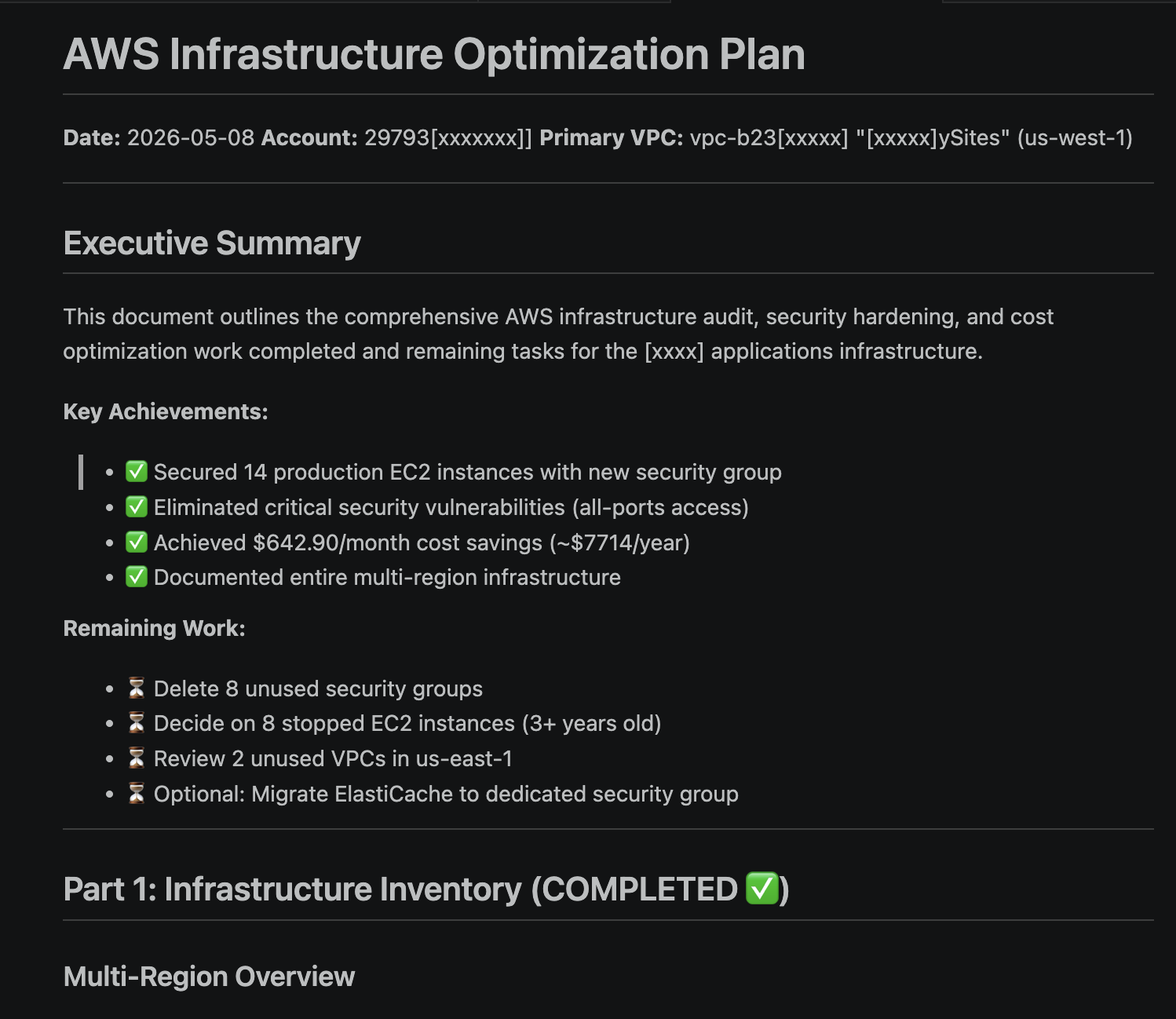
AI/ML
Most AI work stalls between prototype and operations. We help close that gap: architecture, deployment paths, model-provider routing, security guard rails, admin controls, logging, and human review workflows that let teams ship AI features without losing control of the system around them.
Recent work spans vision analysis, retrieval-backed search, and AI-assisted media workflows. In haus-video, that has meant ideation and storyboard generation, review-at-stage controls, guided scene mapping, cast consistency, voiceover, captions, and final render inside the same production environment rather than across disconnected tools.
We also built a video archive search pipeline for a podcast library with 200 episodes: ingest from S3, transcribe with Whisper, generate .srt files, index the transcripts in a vector store, and return answers with source citations including video title, publish date, and exact timestamp. The value is not just the model output. It is the production path around it.
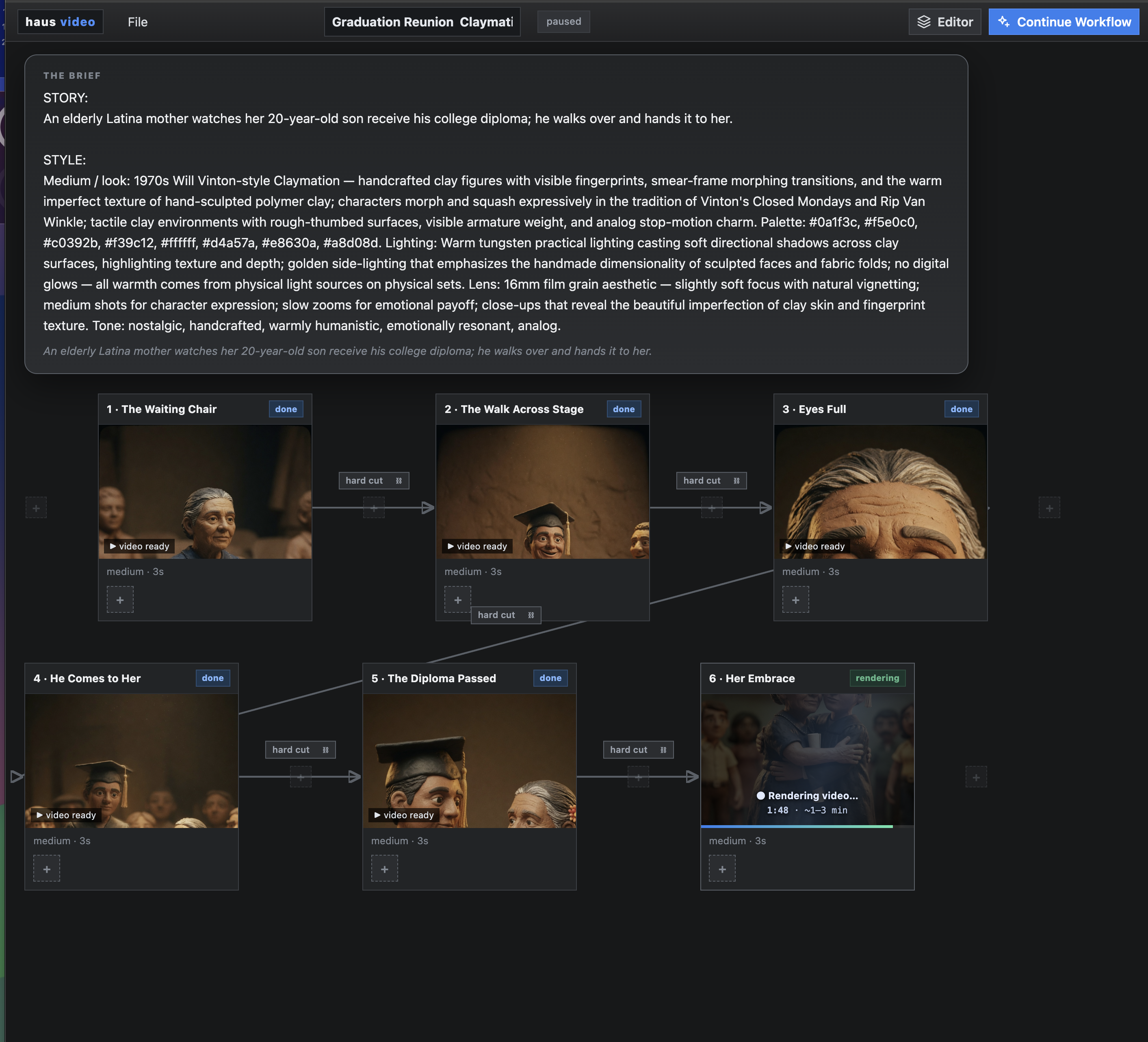
// SELECTED WORK
// CASE STUDY
Global fashion retail · Digital marketing supply chain
1,200+ store fleet. Built three integrated systems: a store-facing ordering portal, a corporate asset management backend, and a real estate–triggered automation engine. When a store opens or renovates, business logic calculates the required marketing package and automatically pushes it before grand opening — no manual ordering. Stores can also self-order from a live catalog.
20+ year engineering partnership


// CASE STUDY
Fashion retail brand · Web2Print workflow
Corporate marketers and store teams both author print-ready collateral — coupons, shelf strips, custom event cards — through a templated design system. Store-created content is routed through an automated approval chain before vendor notification triggers print and ship fulfillment. End-to-end: from blank canvas to physical in-store material, no manual handoffs.


// CASE STUDY
Social media agency · Browser-native video production platform
A social media agency producing high-volume Kickstarter ad campaigns needed to replace their desktop After Effects workflow with something their whole team could run from a browser. Sold the engagement, authored the full technical specification, and delivered a working MVP. The editor runs entirely in the browser: multi-track timeline, drag-and-drop clips, live title animation preview, and a bezier motion path designer for keyframed motion tweens. On export, a JSON timeline schema drives a queue-based cloud render pipeline: Puppeteer captures each animation frame at pixel-accurate resolution, FFmpeg composites video, titles, audio, and effects into a final MP4. Parallel worker pools handle concurrent jobs with dead-letter queue and retry. Worker nodes are provisioned on demand against queue depth and deprovisioned after job completion — compute cost stays proportional to actual render volume.


That consulting engagement — delivering production software to a real agency running real campaigns — is what haus video is built on. We leveraged years of web2video pipeline work, battle-tested against actual agency workflows at production volume, into a product. Different codebase, no overlap. Same hard-won understanding of what content pipelines actually need. haus video is the result: a content generation platform for teams producing video at scale, with AI Studio layered on top.
// SELECTED WORK
More from the portfolio


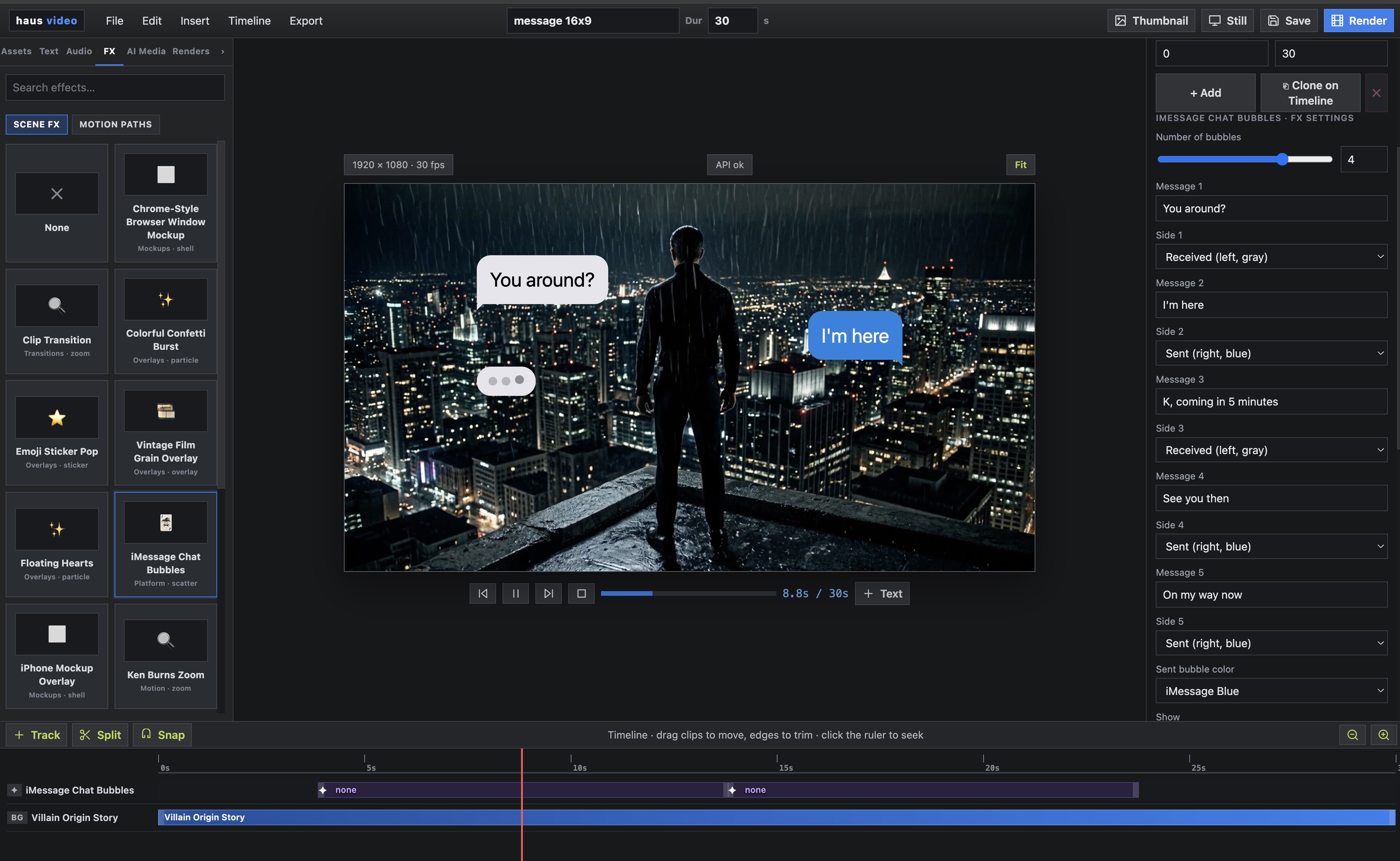
// LET'S WORK TOGETHER
If your team has a complex systems problem that no off-the-shelf tool solves, that's our entry point.
// SAY HELLO
Send us a note. What are you building, and where are you stuck?
hi@hauscreatives.com